
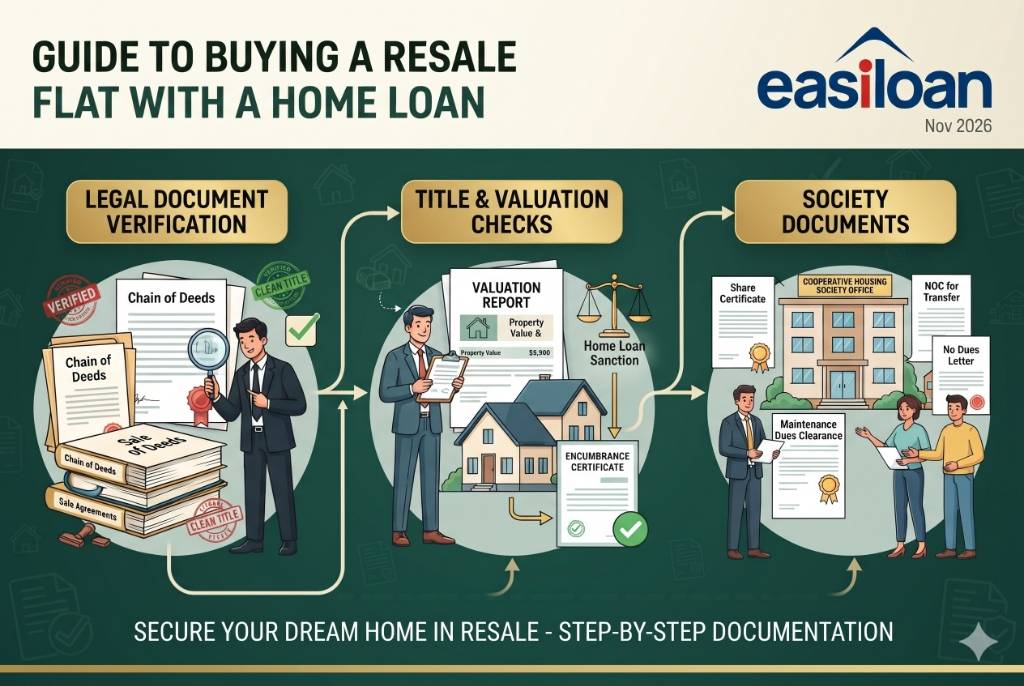
Key takeaways
- For a resale flat, the lender checks the seller's title chain, society papers and any existing loan, in addition to your own income and credit.
- Building age can limit the tenure a lender will offer.
- If the seller has an outstanding loan, the lender usually pays that lender directly and collects the original documents.
- Buyers generally deduct 1% TDS when the property price is ₹50 lakh or more, and file the challan; check current rules before you pay.
Why resale is different
With a new flat from a registered developer, the paper trail is relatively contained. With a resale flat, the property has passed through hands, loans and society rules. The lender must be satisfied that the seller can pass a clean, marketable title to you.
Documents to collect from the seller
- Chain of title: all previous agreements and deeds back to the original allotment or conveyance.
- Latest sale agreement and registered documents, plus the allotment letter where relevant.
- Society documents: share certificate, NOC for transfer, maintenance and tax receipts with no dues.
- Occupancy and completion certificates for the building.
- Approved plan and a layout matching what is being sold.
- Latest property tax and utility bills in the seller's name.
- Existing loan papers if the flat is mortgaged: sanction letter, outstanding statement and a foreclosure letter.
Pair this with an encumbrance certificate and the checks described in our title search guide.
Checks the lender will run on the property
- Legal verification of the title chain by the lender's empanelled lawyer.
- Technical valuation by an approved valuer. If the valuation is below the agreed price, the loan is based on the lower number.
- Building age and condition, which can influence the maximum tenure.
- Approved layout and compliance for the society and the area.
Practical point: negotiate the price with the likely valuation in mind. A gap between price and valuation has to come from your own pocket, which we cover in our guide to property valuation.
If the seller has a loan on the flat
- The seller requests a foreclosure statement from their lender.
- Your lender releases funds directly against that statement.
- The seller's lender hands over the original property documents, which go to your lender.
- You confirm the lien has been cleared before registration.
Never pay the seller the full amount while their old loan is still outstanding. Direct lender-to-lender settlement protects everyone.
TDS, stamp duty and registration
When the sale value is ₹50 lakh or more, the buyer is generally required to deduct TDS at 1% of the price and deposit it with the tax department. The rules and form procedure can change, so check the current position or ask your tax advisor. Stamp duty and registration happen after sanction, as explained in our registration guide.
A short checklist
| Item | Done? |
|---|---|
| Seller's title chain collected | ☐ |
| Society NOC and dues clearance | ☐ |
| Encumbrance certificate | ☐ |
| Valuation vs agreement price compared | ☐ |
| Existing loan foreclosure arranged | ☐ |
| TDS and stamp duty budgeted | ☐ |
Frequently asked questions
Can I get a home loan for a resale flat?▾
Yes. Lenders finance resale properties after verifying the title, valuation and seller documents, as well as your own eligibility.
Why does building age matter?▾
Lenders consider the remaining useful life of the structure. Older buildings can mean a shorter permitted tenure or a lower loan amount.
What if the seller still has a loan on the flat?▾
The lender typically obtains a foreclosure statement, pays off the existing loan from your disbursement and takes the original documents once the seller's lender releases them.
Is a society NOC needed?▾
In cooperative housing societies it is typically required for the transfer. Lenders often ask for it along with the share certificate and maintenance dues clearance.
Who pays TDS on a resale purchase?▾
Generally the buyer deducts TDS at the prescribed rate when the sale value crosses the threshold, and deposits it. Confirm the current rule and the procedure with a professional.
Keep reading
This article is for general information and is lender-neutral. Interest rates, fees and policies change and vary by lender and borrower profile; figures marked illustrative are examples, not offers. Tax and legal points are not professional advice, so please confirm with a qualified professional. Credit is at the sole discretion of the lender, subject to appraisal, eligibility, rates, charges and terms.