
Key takeaways
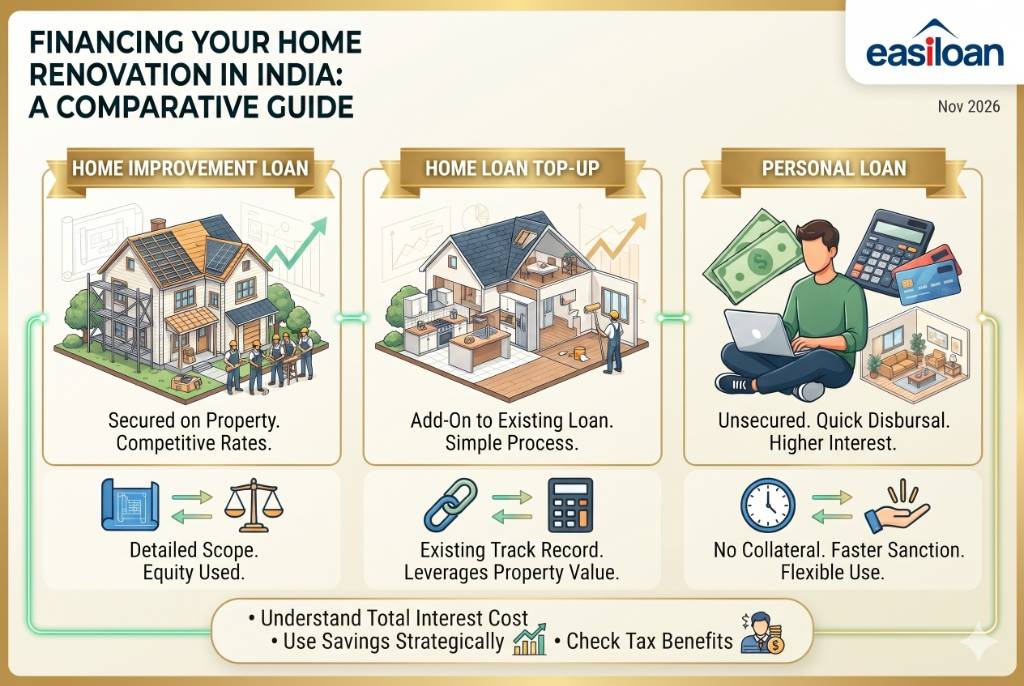
- A home improvement loan is secured on the property and usually costs less than a personal loan.
- A top-up on your existing home loan can be cheaper still, if you qualify and are comfortable with a longer tenure.
- Illustrative ₹10 lakh need: improvement loan 9.5%/7 years EMI about ₹16,344; personal loan 14.5%/5 years about ₹23,528; top-up 9%/10 years about ₹12,668.
- Get written quotes first and finance only the scope you have costed, with a contingency of about 10–15%.
First, size the project
Before comparing loans, write down the scope and get at least two contractor quotes. Lenders often want estimates for a home improvement loan, and your own budgeting works better with real numbers. Separate must-do items (waterproofing, wiring, plumbing) from nice-to-have ones (fittings, décor).
The five funding routes
| Route | Typical security | Cost level | Best when |
|---|---|---|---|
| Savings | None | No interest, but opportunity cost | The need is small and your emergency fund stays intact |
| Home improvement loan | The property | Moderate | You own the home and want a dedicated, structured loan |
| Top-up on home loan | The same property | Moderate | You have a regular repayment record and want a simple add-on |
| Loan against property | Property | Moderate | You need a large amount for a major project |
| Personal loan | None | Highest | Quick, smaller needs, no property papers handy |
An illustrative comparison for ₹10 lakh
The figures below are examples, not offers.
| Option | Rate | Tenure | Monthly EMI |
|---|---|---|---|
| Home improvement loan | 9.5% | 7 years | ₹16,344 |
| Top-up home loan | 9.0% | 10 years | ₹12,668 |
| Personal loan | 14.5% | 5 years | ₹23,528 |
The top-up looks easiest on monthly cash flow because of the longer tenure, but you pay interest for more years. Compare total interest as well as EMI. Our top-up guide shows how to do that.
Rule of thumb: use the cheapest secured option you can comfortably repay, and keep an emergency fund untouched. Do not borrow against your home to fund décor you could phase over a year.
Work with the numbers
- Add 10–15% contingency to the contractor's total.
- Decide how much you will pay from savings and how much to finance.
- Check your FOIR: a new EMI on top of existing ones must still fit.
- Compare processing fees across options using our fees guide.
- Stage the work so you pay contractors against milestones, not upfront.
Tax and value notes
Interest on money borrowed for repairs or renovation may be partly deductible under some tax regimes, within limits. Do not assume a deduction; confirm it. Also consider whether the work adds resale value. Structural or layout upgrades often do; purely cosmetic ones are less predictable.
Common mistakes
- Financing a vague scope and then expanding it mid-project.
- Paying contractors in advance.
- Ignoring the cost of a longer tenure because the EMI looks small.
- Using a credit card for large tickets and revolving the balance.
Frequently asked questions
What is a home improvement loan?▾
It is a secured loan to repair, renovate or extend a property you own. Lenders may ask for contractor estimates and finance a share of the cost.
Is a top-up better than a home improvement loan?▾
If you already have a home loan with a clean track record, a top-up can be simpler and sometimes cheaper. Compare the rate, tenure, fees and whether the lender needs estimates.
Can I get a loan for a rented house?▾
Home improvement loans usually need you to own the property or hold documented rights. Personal loans do not, but they cost more.
Are renovation loans tax-deductible?▾
Interest on borrowing for repair or renovation may qualify for a limited deduction under certain regimes. Limits and conditions apply, so confirm with a tax professional.
How much contingency should I include?▾
Renovations commonly overshoot. Allowing roughly 10–15% above quotes is a prudent buffer.
Keep reading
This article is for general information and is lender-neutral. Interest rates, fees and policies change and vary by lender and borrower profile; figures marked illustrative are examples, not offers. Tax and legal points are not professional advice, so please confirm with a qualified professional. Credit is at the sole discretion of the lender, subject to appraisal, eligibility, rates, charges and terms.