
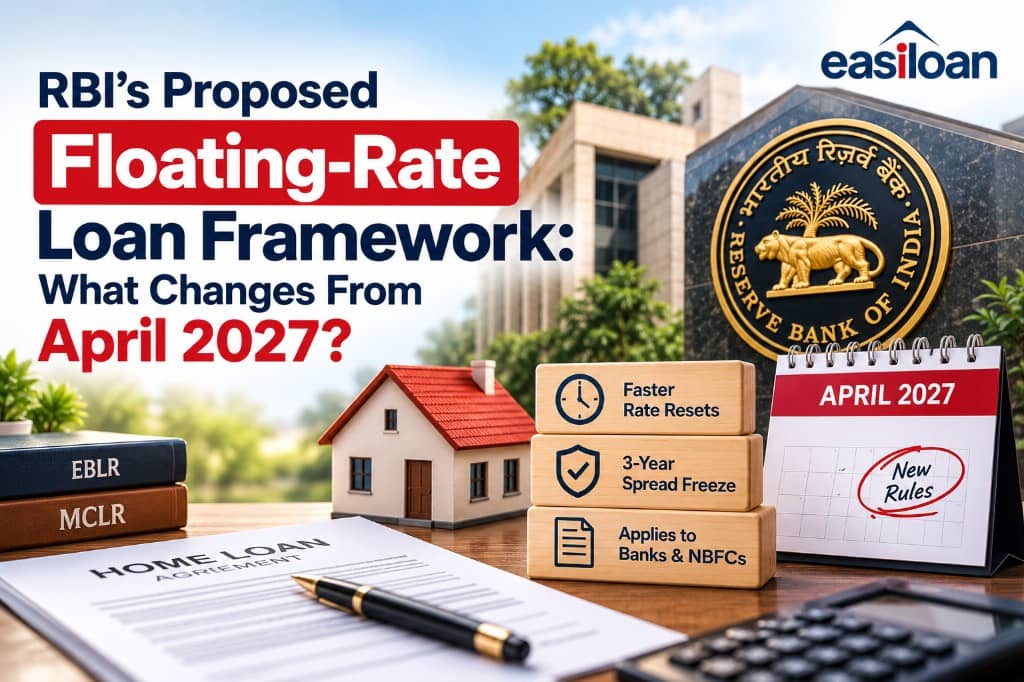
The RBI has floated a draft framework that, if finalised, would be one of the more significant changes to how floating-rate loans are priced in India since the EBLR mandate of October 2019.
What's proposed
The draft RBI (Interest Rates on Loans and Advances) Directions, 2026 sets out a "broad, principles-based framework" intended to harmonise interest-rate rules across banks and NBFCs/HFCs, which currently operate under somewhat different pricing regimes. The RBI took public comments on the draft until 11 September 2026. If finalised as proposed, the directions take effect from 1 April 2027.
The core proposed changes
- Maximum 3-month reset for floating-rate loans. All floating-rate loans would need to reset within a maximum of three months. Today, EBLR-linked loans already reset at least quarterly, but MCLR-linked loans — common among many NBFCs and some older bank loans — can have materially slower cycles, often annual.
- Benchmark fixed for the full tenure. Once chosen, a loan's benchmark cannot change during its life, except if the benchmark itself is discontinued.
- Spread frozen for 3 years. The most borrower-friendly element: components of a lender's spread over the benchmark could not be revised for at least three years on a floating-rate loan.
- Full transparency in the loan agreement. The benchmark, reset periodicity and exact reset date must be explicitly stated in the loan agreement.
- Migration path for existing loans. Existing benchmark-linked loans would migrate to the new framework by 1 April 2029, with borrower consent required, no migration fee, and no rate increase purely due to the switch.
Why it matters for home loan borrowers
Today, two similar borrowers can experience very different rate-transmission speed depending on whether their lender uses EBLR or MCLR, and how much discretion that lender exercises over spread. This framework is designed to close that gap — forcing faster, more uniform resets and removing a lender's ability to quietly widen its margin on an existing borrower mid-tenure. For NBFCs and HFCs, which rely more on MCLR-style internal benchmarks often repriced only annually, the proposed 3-month cap is a meaningfully bigger shift than for most banks, already largely EBLR-linked since 2019.
Apr 2027
Proposed effective date
3 months
Maximum reset period under the draft
3 years
Minimum spread-freeze period
Example
A borrower with an NBFC-issued home loan currently on an internally-benchmarked rate that resets annually could, after the framework takes effect, see their rate reset up to four times a year instead of once — meaning both rate cuts and hikes reach their EMI faster. At the same time, that borrower would gain protection from a spread increase for a minimum of three years, something not guaranteed under current rules.
Nothing changes for any borrower's loan today. Kotak and other brokerages have flagged that the shorter reset period could meaningfully affect NBFC margins and funding costs, which may shape the final text before it's notified.
What should homebuyers do?
- Don't expect any immediate change to your current EMI — even if finalised exactly as drafted, this doesn't take effect until April 2027.
- If you're with an NBFC/HFC on an MCLR-style loan, this is the one to watch — you'd see the biggest change in reset frequency.
- Factor transparency improvements into future lender comparisons once in effect.
- If taking a new loan now, ask your lender how their current reset and spread-revision policy compares to what's proposed.
- Watch for the final notified rules closer to April 2027 rather than acting on the draft as final.
Comparing a bank loan against an HFC offer?
Reset frequency and spread stability are exactly the kind of fine print worth comparing before you sign.
Try the EMI CalculatorQuick EMI Calculator
Model EMI under different rate scenarios while comparing lenders.
Estimated Monthly EMI
₹43,391
Related Reading
Frequently Asked Questions
Is this framework already in effect?▾
No. It is a draft proposal — the RBI (Interest Rates on Loans and Advances) Directions, 2026 — with a proposed effective date of 1 April 2027, pending finalisation.
Will my existing home loan automatically move to the new framework?▾
If finalised, existing benchmark-linked loans would migrate by 1 April 2029 through a one-time exercise, requiring your consent, with no fee and no rate increase purely due to migration.
Does this apply only to home loans?▾
No — the draft framework is broader, covering floating-rate personal loans, MSME loans, and home loans across both banks and NBFCs/HFCs.
What's the single biggest benefit for borrowers in this draft?▾
The proposed 3-year freeze on spread revisions, which would prevent a lender from quietly widening its margin on your existing floating-rate loan for at least three years.
Could the final rules differ from this draft?▾
Yes — the RBI's public comment period closed 11 September 2026, and industry feedback could shape changes before the rules are finalised.
Sources
- Upstox, "RBI floats harmonised interest rate rules for banks, NBFCs; proposes 3-year curbs on loan spread changes," August 2026
- ANI News, "RBI rate framework may limit HFC pricing flexibility, speed up bank rate transmission to NBFCs: Kotak," 14 August 2026
- The Logical Indian, "RBI Proposes New Loan Rules: Floating-Rate Loans May Reset Faster From April 2027," August 2026
- Sanskriti IAS, "RBI Proposes New Loan Interest-Rate Framework, Tighter Rules for Floating-Rate Loans," August 2026
- EcoNiti Daily Brief, "RBI draft tightens floating-rate loan pricing, mandates external benchmarks," 14 August 2026
Information in this article reflects publicly available data and reporting as of the "as of" date stated above. Figures tied to a live or proposed RBI decision may change once a final announcement is made — always confirm the latest position with your lender. This is general information, not financial advice. EMI figures are indicative estimates. Home loan rates, spreads, fees and eligibility vary by lender and are subject to credit appraisal.