
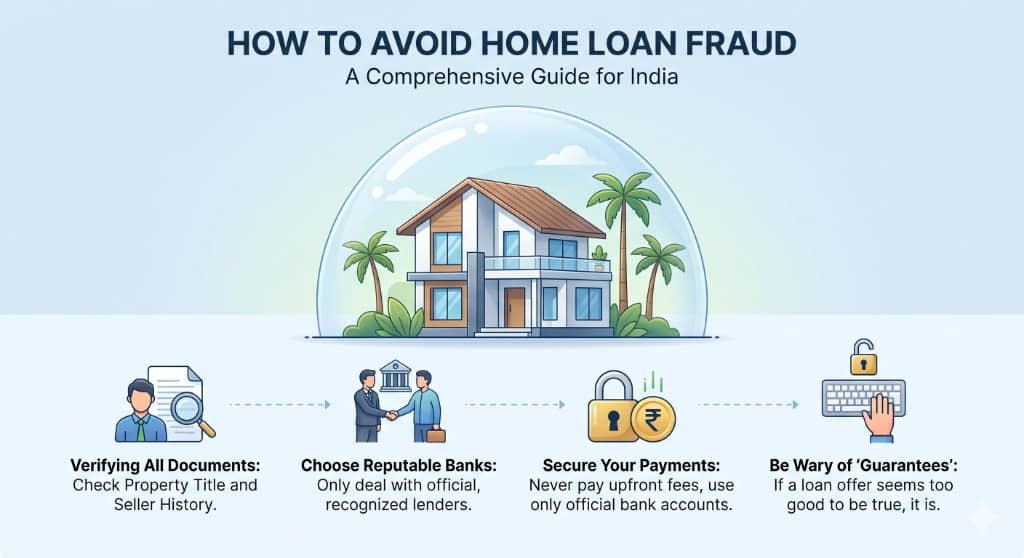
Rising instances of scams have made it important for borrowers to understand how to avoid home loan fraud before applying for financing. With increasing home loan fraud cases in India, individuals need to stay alert at every stage of the borrowing process. Building financial fraud awareness and following essential safety tips can help protect your money and personal information.
What Is Home Loan Fraud?
Home loan fraud refers to any deceptive activity where false information, forged documents, or misleading practices are used to obtain or misuse a home loan. Common types include identity theft, fake property documents, inflated property valuations, and unauthorised loan approvals — targeting either the lender or the borrower for financial gain.
Common Types of Home Loan Fraud in India
With the rise of digital platforms, scams have become more varied. Understanding the different ways fraud can occur helps you stay protected throughout the borrowing process.
Fake Agents
Fraudsters posing as authorised representatives promise quick approvals in exchange for upfront fees.
Document Fraud
Submission of forged income, identity, or property documents to manipulate loan approvals.
Identity Theft
Personal details are misused to apply for loans without the victim's knowledge or consent.
Phishing Scams
Fake calls, emails, or websites designed to steal sensitive information like OTPs or bank details.
Fake Property Documents
Fabricated ownership papers or inflated property valuations used to secure higher loan amounts.
Unverified Lenders
Dealing with unregistered entities rather than recognised HFCs or RBI-regulated NBFCs.
Warning Signs of Home Loan Fraud
Recognising early warning signs can help borrowers avoid financial losses. Many fraud cases follow similar patterns — stay alert to these red flags:
- Requests for Upfront FeesDemands for large advance payments before loan approval are among the most common red flags. Genuine lenders do not collect processing fees before sanction.
- Unrealistic or Guaranteed OffersPromises of guaranteed approvals or unusually low interest rates — regardless of your credit profile — are almost always indicators of a scam.
- Incomplete or Vague DocumentationReluctance to share proper loan agreements, sanction letters, or lender credentials is a major concern in real estate fraud.
- Unverified Contact Numbers or AgentsCalls or messages from unknown agents claiming instant approvals without any formal process should be treated with extreme caution.
- High-Pressure Urgency TacticsFraudsters often urge immediate decisions without allowing time to verify details, read agreements, or consult an advisor.
How to Avoid Home Loan Fraud
Taking careful steps at each stage of the loan process can significantly reduce the risk of falling victim to scams.
- 1
Verify the Lender's Credentials
Always check RBI-registration details, official website authenticity, and customer reviews before proceeding. Registered lenders are listed on the RBI website.
- 2
Submit Documents Only Through Verified Channels
Ensure all documents — PAN card, Aadhaar, income proofs — are submitted securely and only via official lender portals or in-person at registered branches.
- 3
Review Loan Agreements in Detail
Read every clause covering interest rates, prepayment penalties, repayment conditions, and balance transfer terms before signing anything.
- 4
Avoid Unusually High Upfront Payments
Be cautious of any large or unusual processing fees demanded before loan approval. Ask for a fee breakup in writing from the lender.
- 5
Conduct Proper Property Title Verification
Verify ownership, encumbrance status, and legal clearances for the property before the loan process begins. Engage a qualified legal expert if needed.
- 6
Use Secure Communication at All Times
Never share OTPs, account numbers, or passwords over phone calls, WhatsApp, or unverified links — even if the caller claims to be from your bank.
Documents & Checks to Verify Before Applying
| Document / check | Required | You verify |
|---|---|---|
KYC Documents Aadhaar, PAN card, address proof | ✓ | ? |
Income Proof Salary slips, ITR, bank statements | ✓ | ? |
Property Papers Title deed, approvals, encumbrance certificate | ✓ | ? |
Lender Credentials RBI registration, official contact details | ✓ | ? |
Loan Agreement Terms Interest rate, tenure, prepayment clauses | ✓ | ? |
Credit Report Review Check all four bureaus for accuracy | ✓ | ? |
Green check = mandatory for every application. Grey circle = confirm with your lender or legal advisor before you sign.
Safe Practices When Applying Online
Applying for a home loan online is convenient, but requires additional caution. Follow these practices to stay secure:
Verify Website Security
Use only official lender websites. Check for HTTPS in the URL and a padlock icon before entering any details.
Never Share OTPs
Never disclose OTPs or login credentials to unknown callers — even if they claim to be from a bank or NBFC.
Beware of Phishing
Do not click on suspicious email or SMS links claiming loan approvals, free offers, or urgent account alerts.
Follow RBI Guidelines
Ensure the lender follows RBI-mandated fair practice codes before submitting any personal or financial data.
Monitor Credit Reports
Regularly check your credit report to detect any unauthorised loan enquiries or account openings in your name.
Use Official Apps Only
Download lender apps only from official app stores. Avoid third-party APKs or links sent via messages.
What to Do If You Become a Victim
Act Immediately — Time Is Critical
If you suspect fraud in your home loan process, acting quickly can help limit financial damage and protect your credit profile. Timely reporting and proper documentation are essential to initiate corrective action.
File a complaint at cybercrime.gov.in or call the national cybercrime helpline 1930 immediately after discovering the fraud.
Notify your HFC or NBFC and request account blocking or transaction reversal if applicable. Keep a reference number for all communications.
Escalate unresolved issues to the Banking Ombudsman via the RBI's Integrated Ombudsman Scheme for further action and resolution.
Keep records of all suspicious communications, transactions, screenshots, and complaint reference numbers for legal proceedings.
Regularly check bank statements and all four credit bureau reports for suspicious activity, new accounts, or unauthorised enquiries.
Frequently Asked Questions
How can I avoid home loan fraud in India?▾
Verify lender credentials, avoid sharing sensitive details, and check all documents carefully. Use official channels and secure communication, and never pay large fees before loan sanction.
What are the most common home loan scams?▾
Common scams include fake agents, forged documents, identity theft, and phishing attempts. Fraudsters often promise quick approvals or extremely low interest rates regardless of your credit profile.
How do I verify if a lender is genuine?▾
Check whether the lender is registered with the Reserve Bank of India, review their official website, and verify contact details. Avoid unverified intermediaries or agents requesting upfront payments.
Is it safe to apply for a home loan online?▾
Applying online is safe when done through official lender websites. Avoid clicking unknown links, never share OTPs, and always verify the website's security certificate before submitting information.
What should I do if I am scammed during the loan process?▾
Report the incident immediately to cybercrime authorities at cybercrime.gov.in and inform your lender. Keep records of all transactions and communications, and escalate to the Banking Ombudsman if unresolved.
How to identify fake loan agents?▾
Fake agents often ask for upfront fees, promise guaranteed approvals, avoid proper documentation, and pressure you into quick decisions. Always verify their credentials with the lender directly before proceeding.
Apply safely with Easiloan
Trusted home loan solutions with dedicated support — compare lenders after checking your eligibility.
This article is for informational purposes only and does not constitute legal or financial advice.